A proper Smoke alarm check for landlords Is not a nice‑to‑have; it’s a legal duty that can protect your tenants and keep your investment safe — In this guide I’ll walk you through the five legal must‑haves that many property owners overlook, show you how to test and maintain alarms across the six states, and give you a practical checklist you can use every six months — You’ll come away with a clear, compliant routine that meets AS 3786 standards and avoids costly fines.
Legal Landscape: What Every Landlord Must Know
From my experience, the first thing landlords should understand is that fire‑safety law in Australia is state‑driven, but the national standard AS 3786 underpins all requirements — If you own a property in Sydney’s Inner West, the Residential Tenancies Act 2026 forces you to have a working smoke alarm on each level of the dwelling. Melbourne’s docklands, the building act 2026 adds a requirement for interlinked alarms in multi‑unit buildings. And in Brisbane’s Fortitude Valley, the Queensland Fire Safety Regulation 2026 mandates battery‑powered alarms with a ten‑year lifespan.
- All alarms must be Hard‑wired With a battery back‑up, unless the dwelling is a small, single‑room rental.
- Alarms must be installed on every level, including the kitchen, but not directly above cooking appliances.
- Landlords must keep a log of each test and any maintenance performed for at least five years.
The thing is, if you miss any of those points you’re looking at a potential fine that can run into the thousands. Honestly, the safest route is to treat the smoke alarm check as a regular maintenance task, not a once‑off after‑the‑fact fix.
The 5 Surprising Legal Musts
1. Mandatory Six‑Month Test Interval
What typically happens is that many landlords think a yearly test is enough — The law however says you must test every six months. In NSW the Residential Tenancies Regulation 2026 explicitly mentions a six‑month interval for “any smoke alarm installed in a rental property”. The same rule applies in Victoria and Queensland with slight wording differences but identical enforcement.
- Set a calendar reminder on the first day of each month that is an even number (e.g., February, April, August, October).
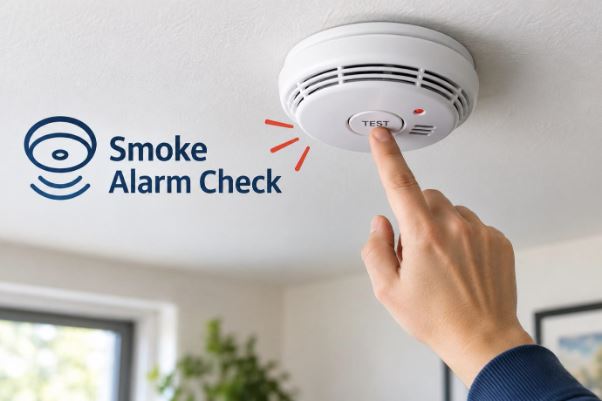
- Use the test button on the alarm; you should hear a loud, clear tone lasting at least three seconds.
- If the alarm fails, replace it within 24 hours and document the swap.
2. Battery‑Only Alarms Are No Longer Acceptable for New Installations
In my experience, the shift to hard‑wired units with battery back‑up happened in 2026, but many landlords still have battery‑only alarms from older builds. The 2026 amendment to AS 3786 bans new battery‑only installations in rental properties across all states. Existing battery‑only units can stay until they reach the end of their ten‑year lifespan, but they must be replaced when they fail a test.
- Check the manufacture date on the back of each alarm.
- If the date is older than ten years order a replacement hard‑wired unit from a reputable brand like Kidde or FireX.
- Hire a qualified electrician for the hard‑wire job to avoid breaching the Building Code of Australia.
3. Interlinked Alarms Required in Multi‑Unit Dwellings…
What typically happens is a landlord with a duplex in Perth thinks one alarm per unit is fine. The WA Fire Safety Act 2026 clarifies that any building with more than one dwelling must have interlinked alarms that sound throughout the entire structure. This prevents a scenario where a fire starts in one unit and the neighbour never hears it.
- Install a mains‑powered alarm on each level, connected via a dedicated circuit.
- Test the interlink by pressing the test button on any one alarm; all should sound simultaneously.
- Document the interlink test results in your compliance log.
4 — Tenancy Fire‑Safety Checklist Is Not Optional
In my experience, landlords often treat the tenancy fire‑safety checklist as a formality. The reality is that the checklist is a legal document in NSW, VIC, and ACT. If a tenant signs a tenancy agreement without a completed checklist, the landlord can be held liable for any fire‑related injury.
- Provide the tenant with a copy of the checklist on move‑in.
- Ask the tenant to sign that they have read & understood the fire‑safety procedures.
- Store the signed copy in a secure digital folder for at least five years.
5. Failure to Notify Tenants of Alarm Maintenance Can Lead to Penalties…
Honestly, the most overlooked must‑have is communication. If you replace an alarm, you must give the tenant written notice at least 48 hours before the work. In South Australia, the Residential Tenancies Act 2026 imposes a penalty for failing to provide proper notice of safety‑related maintenance.
- Send an email or SMS with the date, time, and purpose of the visit.
- Include a brief description of the alarm model and any safety features.
- Keep a copy of the sent notice and any tenant acknowledgment.
Step‑by‑Step Smoke Alarm Check for Landlords
Preparation
First, gather all the tools you’ll need: a ladder for high‑level alarms, a fresh AA battery, a screwdriver, and a printable compliance checklist. In my experience, a simple spreadsheet works well – column A for address, column B for alarm type, column C for last test date, column D for battery replacement date, and column E for notes.
- Print a copy of the AS 3786 standard summary for quick reference.
- Download the state‑specific fire‑safety forms from the relevant government website.
- Set a reminder on your phone for the next six‑month test date.
Testing the Alarm
When you reach the alarm, press the test button — You should hear a loud, continuous tone that lasts at least three seconds. If the alarm is silent, replace the battery immediately and retest. In a multi‑unit building, also verify the interlink by testing a single unit and confirming all others sound.
- Check for visible dust or cobwebs that could impair the sensor.
- Wipe the exterior with a dry cloth; never use liquids.
- Record the test result in your compliance log right away.
Replacing the Alarm —
If the alarm fails the test, you have 24 hours to replace it. Choose a model that meets the 2026 AS 3786 revision – look for the “B‑type” label for battery‑backed units & “C‑type” for hard‑wired with battery back‑up. In Brisbane’s suburbs like Carindale, local hardware stores such as Bunnings stock Kidde and FireX models that are already certified for Australian use.
- Turn off power at the circuit breaker before removing a hard‑wired unit.
- Secure the new alarm with the supplied mounting plate.
- Restore power and press the test button to confirm proper operation.
State‑by‑State Requirements
New South Wales (NSW)
In NSW the Residential Tenancies Regulation 2026 demands a functional smoke alarm on each level of a rental property plus a separate alarm in every kitchen — The alarm must be a combination ionisation‑photoelectric type, & the landlord must test it every six months — The regulator also requires a written entry in the tenancy agreement confirming compliance.
- Use the NSW Safe Homes online portal to submit your compliance report.
- Retain evidence of each test for at least five years.
- Check the NSW Fire & Rescue NSW website for any updates to the AS 3786 standard.
Victoria (VIC)
Victorian law, under the Residential Tenancies Act 2026, mirrors NSW but adds a requirement for interlinked alarms in any building with more than one dwelling. The landlord must also provide a fire‑safety information pack, which includes a checklist and evacuation plan.
- Install interlinked alarms on the roof and each floor.
- Provide tenants with a laminated fire‑exit map.
- Log each test in a digital spreadsheet & back it up to a cloud service.
Queensland (QLD)
Queensland’s Fire Safety Regulation 2026 requires a hard‑wired alarm with battery back‑up on every level, and a separate alarm in each kitchen. The law also mandates that landlords replace any alarm that is more than ten years old, regardless of test results.
- Check the manufacture date on the back of each alarm.
- If the alarm is older than ten years, replace it during the next scheduled test.
- Use the Queensland Building and Construction Commission (QBCC) portal to upload your compliance records.
Western Australia (WA)…
WA’s Fire Safety Act 2026 is strict about interlinked systems in multi‑unit homes. The act also requires landlords to 🔥give tenants a written notice at least 48 hours before any alarm maintenance or replacement.
- Send the notice via email or post and keep a copy of the receipt.
- Document the interlink test results in a dedicated “WA Compliance” folder.
- Keep the notice copy for at least five years.
Australian Capital Territory (ACT)
The ACT follows the national AS 3786 standard but adds a requirement that landlords conduct a visual inspection of each alarm’s placement during the six‑month test. The visual check ensures the alarm isn’t obstructed by curtains or furniture.
- Take a quick photo of each alarm after testing.
- Upload the photos to your compliance folder.
- Mark any obstructed alarms for immediate correction.
South Australia (SA)
South Australia’s Residential Tenancies Act 2026 includes a clause that tenants can request a smoke alarm test at any time, and landlords must comply within 24 hours. Failure to do so can result in a fine and possible compensation claims.
- Set up a simple “request” form on your property‑management portal.
- Assign a maintenance crew to respond within the 24‑hour window.
- Log each request and the completion time for audit purposes.
Common Pitfalls & How to Avoid Them
From what I’ve seen, the most common mistake is assuming that a “good‑looking” alarm means it’s functional. A dusty sensor can fail to detect smoke, and a dead battery can silence even the newest unit. The solution is a systematic visual and auditory test every six months.
- Never rely on the tenant to report a dead alarm – schedule the test yourself.
- Keep a spare battery of the correct voltage (usually AA 1.5 V) on hand for quick replacement.
- Use a voltage tester on hard‑wired units to confirm they receive power.
Another pitfall is forgetting to update the compliance log after a replacement. Many landlords think an old entry is enough but auditors will ask for proof of the new installation. Honestly the best practice is to take a photo of the new alarm note the serial number, & attach the photo to the log entry.
- Label each alarm with a unique identifier (e.g., “LivingRoom‑001”).
- Record the serial number, installation date, and test date in the log.
- Store the log in both a physical binder and a secure cloud folder.
Record‑Keeping and Documentation Best Practices —
In my experience, the difference between a smooth audit and a nightmare is how you store your records. The NSW Safe Homes portal, the Victorian Consumer Affairs website, and the Queensland QBCC all allow you to upload PDFs of your compliance logs. Keep a master index that lists each property, the type of alarm, and the dates of the last three tests.
- Use a consistent file‑naming convention, e.g., “_SmokeAlarmLog_2026.pdf”.
- Back up the files weekly to a cloud service like OneDrive or Google Drive.
- Set a calendar reminder to review the logs annually for any missing entries.
When you replace an alarm, attach the manufacturer’s data sheet to the log entry. This proves the alarm meets the 2026 AS 3786 revision and helps you answer any future queries from fire inspectors.
- Keep the data sheet in a sub‑folder named “ManufacturerDocs”.
- Include the warranty expiry date in the log.
- Mark the entry as “Completed” once the tenant has signed the notice of work.
Tools, Brands, & Resources Landlords Trust
Here’s what I tell people: don’t skimp on the alarm itself. Stick to well‑known Australian‑approved brands like Kidde, FireX, and HESTA. These models are tested against AS 3786 and are readily available at Bunnings, Mitre 10, or local fire‑safety suppliers in suburbs such as Parramatta or Glenelg.
- Kidde 10‑Year Hard‑Wired with Battery Back‑up – model KID‑C10.
- FireX Photoelectric Smoke Alarm – model FX‑PA‑2026.
- HEST A Dual‑Sensor Alarm – model HESTA‑DS 2026.
For testing tools a simple multimeter can verify voltage on hard‑wired units. A battery tester works for battery‑only alarms. And don’t forget a sturdy step‑ladder – safety first when you’re climbing onto the roof of a Townsville terrace.
- Multimeter – Fluke 101 (affordable and accurate).
- Battery tester – Duracell 2‑Pack AA tester.
- Step‑ladder – 6‑ft aluminum ladder with anti‑slip feet.
Conclusion
Doing a thorough Smoke alarm check for landlords Isn’t just about ticking a box; it’s about staying on the right side of the law, protecting your tenants, & avoiding costly penalties. By following the five legal must‑haves, using a consistent testing schedule, and keeping meticulous records, you’ll meet the standards in NSW, VIC, QLD, WA, ACT, and SA. Remember, the key is regular, documented testing, using compliant equipment, and clear communication with tenants. Stay proactive, keep your logs up‑to‑date, & you’ll sleep easier knowing your property is fire‑safe & legally sound.