
Advanced Tips for Designing Kitchens with Granite Benchtops

Have you been dreaming about transforming your kitchen into a stunning culinary haven? Are you wondering what material will give you that perfect blend of durability and drop-dead gorgeous looks? Perhaps you’re curious about whether granite benchtops are worth the investment for your Sydney home?


You’re definitely in the right place. Granite benchtops have been a favourite among Australian homeowners for decades, and for good reason. This natural stone brings an unmatched elegance to any kitchen while standing up to the demands of busy family life. Whether you’re planning a complete kitchen renovation or simply upgrading your benchtops, granite offers incredible versatility that works with virtually any design style.


In this guide, we’ll explore everything you need to know about designing kitchens with granite benchtops. From selecting the perfect colour and pattern to understanding installation requirements, we’ve got you covered. Plus, we’ll share insider tips on creating visual flow, avoiding common mistakes, and keeping your granite looking pristine for years to come. Let’s get stuck into it!


Why Choose Granite Benchtops for Your Sydney Kitchen?


Durability and Longevity Benefits

When it comes to kitchen surfaces, granite is genuinely tough as nails. This natural stone handles heat like a champion, meaning you can place hot pots directly on the surface without worry. It’s also incredibly resistant to scratches, which is brilliant news for anyone who does a lot of food prep.


Granite’s density makes it naturally resistant to bacteria and stains when properly sealed. This hygienic quality is particularly important in kitchens where food safety matters. Unlike some synthetic materials, granite won’t warp, crack, or discolour from everyday use.


What’s more, granite benchtops can genuinely last a lifetime with proper care. Many Sydney homes still feature granite installed decades ago, looking just as stunning as the day it went in.


Aesthetic Versatility and Natural Beauty

Every granite slab is completely unique, like a fingerprint from nature. The swirls, veins, and colour variations mean your kitchen will have a one-of-a-kind look that simply can’t be replicated. From dramatic blacks with gold flecks to subtle creams with gentle movement, there’s a granite for every taste.


This natural beauty brings warmth and character that synthetic materials struggle to match. Granite works beautifully in both traditional and contemporary kitchens, making it a versatile choice regardless of your design preferences.


How Much Do Granite Benchtops Cost in Sydney?

Pricing varies considerably depending on the granite variety, slab thickness, and complexity of your installation. Generally, you can expect to pay between per square metre installed in Sydney. Exotic or rare granite colours sit at the higher end, while more common varieties offer excellent value.


Remember to factor in templating, fabrication, and installation costs. Getting quotes from multiple suppliers gives you a clearer picture of what to budget.


Selecting the Perfect Granite for Your Kitchen Design


Popular Granite Colours and Patterns in Australia

Australian homeowners tend to gravitate towards several classic granite options. Black Galaxy, with its stunning gold and silver flecks, remains a perennial favourite for modern kitchens. Kashmir White offers a softer look with grey and burgundy veining that complements lighter cabinetry.


Colonial Gold brings warm amber and brown tones perfect for traditional spaces. Steel Grey delivers a sophisticated, understated elegance that works wonderfully in minimalist designs. Emerald Pearl features beautiful green and blue iridescence that makes a bold statement.


Is Granite Better Than Quartz for Kitchen Benchtops?

This question comes up constantly, and honestly, both materials have their merits. Granite offers natural uniqueness and superior heat resistance. Each slab tells its own geological story spanning millions of years.

Quartz provides more consistent colouring and requires less maintenance. However, it can’t handle heat as well and lacks the distinctive character of natural stone. Your choice ultimately depends on whether you prioritise natural beauty or uniform appearance.


Matching Granite to Your Cabinetry and Flooring

Creating harmony between your granite, cabinetry, and flooring is essential for a cohesive design. Dark granite pairs magnificently with white or light timber cabinetry, creating striking contrast. Lighter granites work beautifully with darker cabinets or can create a seamless, airy feel with matching light tones.


Consider bringing home granite samples to view alongside your existing finishes. Natural light dramatically affects how granite appears, so check samples at different times of day.


Advanced Design Tips for Granite Benchtop Kitchens


Creating Visual Flow with Edge Profiles

Edge profiles might seem like a small detail, but they significantly impact your kitchen’s overall aesthetic. Bullnose edges create soft, rounded profiles perfect for family kitchens. Bevelled edges add contemporary sophistication. Ogee profiles bring ornate elegance suited to traditional designs.


Your edge profile should complement your cabinetry style. Sleek, modern cabinets call for simpler edges, while detailed cabinetry can handle more elaborate profiles.


Incorporating Waterfall Edges and Island Features

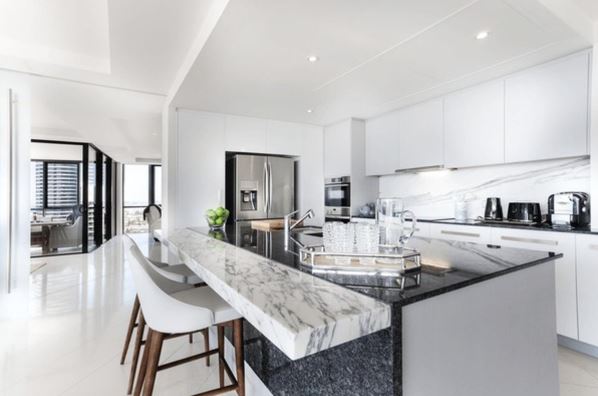
Waterfall edges—where the granite flows down the sides of an island or peninsula—create absolutely stunning focal points. This technique showcases the stone’s natural beauty while adding architectural interest.


For kitchen islands, consider using a feature granite that differs subtly from your main benchtops. This creates visual separation whilst maintaining design cohesion.


Balancing Light and Dark Granite in Open-Plan Spaces

Open-plan living areas require careful consideration of how your granite interacts with adjoining spaces. Dark granite in a small kitchen can feel heavy, while light granite might lack impact in a large, open area.


Consider the natural light your space receives. North-facing kitchens handle darker granites beautifully, whilst south-facing spaces often benefit from lighter tones.


What Thickness Should Granite Benchtops Be?

Standard granite thickness in Australia is typically 20mm or 30mm. Thicker slabs create a more substantial, luxurious appearance but come at increased cost. For most residential applications, 20mm provides excellent durability and visual appeal.


Island benchtops often look more impressive with 30mm or even 40mm thickness, particularly when featuring waterfall edges.


Practical Considerations for Granite Benchtop Installation


How Do You Measure for Granite Benchtops?

Professional templating is absolutely essential for granite installation. Fabricators use precise digital measuring equipment to create exact templates of your benchtop areas. This process typically happens after your cabinetry is installed and level.


Don’t attempt DIY measurements for granite. The material’s cost and weight make professional templating a worthwhile investment that prevents costly errors.


Working with Sydney Granite Suppliers and Fabricators

Choosing the right supplier makes an enormous difference to your final result. Look for fabricators with solid reputations, extensive portfolios, and proper workshop facilities. Visit their yard to hand-select your actual slabs rather than choosing from small samples alone.


Ask about their installation process, warranties, and how they handle any issues that might arise. A reputable fabricator stands behind their work.


Structural Requirements and Support Considerations

Granite is heavy—roughly 18-20kg per square metre for 20mm thickness. Your cabinetry must adequately support this weight, particularly around sink cutouts and overhangs.


Overhangs exceeding 300mm typically require additional support through brackets or corbels. Your fabricator will advise on specific requirements for your design.


Caring for Your Granite Benchtops


Do Granite Benchtops Need to Be Sealed?

Yes, granite requires sealing to maintain its stain resistance. Most granites need resealing every one to two years, though some denser varieties require less frequent treatment. A simple water test—seeing how quickly droplets absorb—indicates when resealing is needed.

Quality sealers penetrate the stone without changing its appearance. Your fabricator will typically seal your benchtops before installation.


Daily Cleaning and Maintenance Best Practices

Daily care is straightforward. Wipe spills promptly, clean with pH-neutral cleaners, and avoid acidic products like vinegar or lemon juice. A soft cloth and warm, soapy water handle most cleaning needs perfectly.


Avoid placing extremely cold items directly on granite, as thermal shock can occasionally cause issues. Use trivets for very hot cookware as an extra precaution.


How Long Do Granite Benchtops Last?

With proper care, granite benchtops genuinely last forever. This isn’t marketing speak—granite is millions of years old and incredibly stable. Your benchtops will likely outlast everything else in your kitchen.


Common Mistakes to Avoid When Designing with Granite


Rushing the selection process tops the list. Take time viewing full slabs rather than relying solely on samples. Ignoring vein direction creates disjointed appearances across seams. Choosing trendy colours over timeless options might date your kitchen prematurely.


Skimping on fabrication quality leads to poor fits and visible seams. Always prioritise experienced fabricators, even if costs are slightly higher. Finally, forgetting to plan sink and cooktop cutouts early can limit your granite options.


Bringing Your Dream Granite Kitchen to Life


Designing a kitchen with granite benchtops is genuinely exciting. You’re choosing a material that’s been treasured for centuries, one that brings natural beauty and incredible practicality to the heart of your home.


Throughout this guide, we’ve explored everything from selecting the perfect granite colour to understanding installation requirements and maintenance needs. The key takeaways? Invest time in viewing full slabs, work with reputable Sydney fabricators, and don’t underestimate the importance of edge profiles and proper support.


Your granite kitchen awaits, and with these advanced tips, you’re brilliantly equipped to make decisions that’ll bring you joy for decades. Take your time, trust your instincts, and enjoy the process of creating something truly special. Here’s to cooking up memories in your stunning new space!

The Best Garage Floor Coating Solutions for Your Home

Ever walked into your garage and felt a bit underwhelmed by that cracked, stained concrete floor staring back at you? Perhaps you’ve wondered why your neighbour’s garage looks like it belongs in a showroom while yours resembles something from a construction site? You’re definitely not alone in this.


Your garage floor puts up with a lot. We’re talking about oil drips, chemical spills, heavy tools dropping, and the constant weight of vehicles rolling in and out. Yet most of us barely give it a second thought until the damage becomes impossible to ignore. The truth is, a quality garage floor coating does more than just make things look pretty—it protects your concrete investment and can genuinely transform how you use your space.


In this guide, we’ll explore everything you need to know about garage floor coatings. From understanding the different types available to figuring out whether you should tackle the job yourself or call in the professionals, we’ve got you covered. Plus, we’ll break down the costs involved for Australian homeowners and share tips on keeping your coated floor looking brilliant for years to come. Let’s get stuck into it.


Understanding Garage Floor Coatings: The Basics

So, what exactly is garage floor coating, and why should you bother with it? Simply put, it’s a protective layer applied over your concrete floor that shields it from damage, stains, and general wear. Think of it like sunscreen for your garage—it creates a barrier between the concrete and everything you throw at it.

A quality coating typically lasts between 10 and 20 years, depending on the type you choose and how well you maintain it. Epoxy coatings generally sit at the lower end of that range, while polyaspartic options can push towards the upper limits with proper care. Of course, your usage patterns matter too—a workshop sees more action than a simple car storage space.

How do you know when your floor needs attention? Keep an eye out for visible cracks, persistent stains that won’t shift, or areas where previous coatings have started peeling. If water no longer beads on the surface or you notice dusting (that chalky residue concrete sometimes produces), it’s time to consider a fresh coating.


Types of Garage Floor Coating Solutions


Epoxy Garage Floor Coatings


Epoxy coating has been the go-to choice for garage floors for decades, and there’s good reason for that. It’s made from a combination of resin and hardener that chemically bond to create an incredibly durable surface. Once cured, it forms a thick, glossy finish that resists most chemicals, oils, and everyday wear.


Is epoxy worth it for your garage? For most Australian homeowners, absolutely yes. It offers excellent value for money, comes in various colours and finishes (including those fancy flake designs), and can handle the demands of a busy household garage. Just bear in mind that epoxy doesn’t love UV exposure—if your garage door stays open frequently, you might notice some yellowing over time.


The pros include impressive durability, chemical resistance, and an attractive finish that’s easy to clean. On the flip side, epoxy takes several days to cure fully, it can be slippery when wet, and it doesn’t perform brilliantly in extreme temperature fluctuations. For garages in regions with harsh summers, this is worth considering.


Polyurethane Garage Floor Coatings

Polyurethane sits a step above epoxy in some respects. While epoxy excels at bonding to concrete, polyurethane offers superior flexibility and UV resistance. Many professionals actually recommend using both—epoxy as a base coat with polyurethane on top for maximum protection.


Compared to epoxy, polyurethane creates a slightly softer finish that’s less prone to scratching and handles temperature changes better. It’s particularly brilliant for garages that double as workshops where you might be moving heavy equipment around regularly. The flexibility means it won’t crack as easily under stress.


Polyurethane works best when you want that extra layer of protection without sacrificing appearance. It’s especially popular in coastal areas of Australia where salt air can be tough on coatings. The investment is slightly higher than epoxy alone, but the longevity often makes it worthwhile.


Polyaspartic Garage Floor Coatings

Here’s where things get exciting. Polyaspartic coating is relatively newer to the market but has quickly gained popularity among Australian homeowners. It’s essentially a type of polyurethane with some seriously impressive advantages.

The standout feature? Cure time. While epoxy might keep you out of your garage for days, polyaspartic can cure in just a few hours. You could literally have your floor coated in the morning and park your car by evening. It also handles UV exposure brilliantly (no yellowing), works in a wider temperature range, and offers exceptional durability.


Australian homeowners are choosing polyaspartic because it suits our climate perfectly. Whether you’re in scorching Queensland or chilly Tasmania, this coating performs consistently. The catch? It comes with a higher price tag and requires professional application—the fast cure time that’s a benefit for users makes it tricky for DIY enthusiasts.


Concrete Sealers and Paint

Not everyone needs a full coating system. Sometimes a simple concrete sealer does the job nicely, particularly if your garage sees light use or you’re working with a tight budget. Sealers penetrate the concrete to provide basic protection against moisture and staining without building up a thick surface layer.


Garage floor paint is another budget-friendly option. It’s straightforward to apply and comes in countless colours, but don’t expect the durability of proper coatings. Paint tends to wear through in high-traffic areas and may need reapplication every few years.


These options make sense if you’re renting, preparing a house for sale, or simply want a quick refresh without major investment. They won’t deliver the same performance as epoxy or polyaspartic, but they’re honest solutions for specific situations.


How to Choose the Best Garage Floor Coating for Your Home

Selecting the right coating comes down to three main factors: your local climate, how you use your garage, and your budget. In Australia’s varied conditions, this matters more than you might think.


For hot, sunny regions, polyaspartic or UV-stable polyurethane makes more sense than standard epoxy. If you’re in a cooler area where your garage stays relatively protected from direct sunlight, epoxy offers excellent value. Consider what activities happen in your garage too—workshops need tougher coatings than simple storage spaces.


Should you DIY or hire professionals? That depends on your confidence level and the coating type you choose. Epoxy kits are readily available at hardware stores and manageable for handy homeowners. Polyaspartic, however, really demands professional application due to its rapid cure time.


DIY Garage Floor Coating Guide

Fancy tackling this yourself? The basic process involves thorough cleaning, concrete repair, etching or grinding the surface, and then applying the coating in thin, even layers. Preparation is genuinely 80% of the job—skip it, and your coating won’t bond properly.


Common mistakes include not allowing enough cure time between coats, applying coating too thickly, and ignoring humidity conditions. Also, many DIYers underestimate how much product they need. Always buy slightly more than you calculate.


Call in professionals if your concrete has serious damage, if you’ve chosen a fast-curing product, or if you simply want guaranteed results. Sometimes peace of mind is worth the extra cost.

Cost of Garage Floor Coating in Australia

For a standard double garage, DIY epoxy kits run between for materials. Professional installation typically ranges from, depending on the coating type and your location. Polyaspartic professional installation sits at the higher end, often.


Hidden costs to budget for include concrete repairs, proper cleaning equipment, and potentially garage clearance if professionals are handling the job. Some installers charge extra for moving items.


Is professional installation worth it? If you value your time and want guaranteed results, absolutely. Professionals bring experience, commercial-grade products, and warranties that DIY simply can’t match.


Maintaining Your Garage Floor Coating

Keeping your coated floor looking sharp is surprisingly simple. Regular sweeping prevents grit from scratching the surface, and occasional mopping with mild detergent handles most spills. Avoid harsh chemicals and abrasive cleaners—they can dull the finish over time.


For stubborn stains, act quickly. Most coatings resist penetration if you catch spills early. Keep a bag of absorbent material handy for oil drips.


Plan on recoating every 10 to 15 years for epoxy, potentially longer for polyaspartic. Watch for worn areas near the garage door and under parking spots—these typically show wear first.

Making the Right Choice for Your Home


Choosing a garage floor coating ultimately comes down to balancing your needs, budget, and expectations. Epoxy remains a solid, affordable choice for most households. Polyaspartic offers premium performance for those willing to invest more. Sealers and paints serve well for lighter duties and tighter budgets.


Whatever you choose, remember that proper preparation and application make all the difference. A well-applied budget coating outperforms a poorly installed premium one every time. Take your time with the decision, prepare thoroughly, and don’t hesitate to seek professional advice if you’re uncertain.


Your garage floor works hard for you every day. Give it the protection it deserves, and it’ll reward you with years of reliable, attractive service. Now get out there and transform that tired concrete into something you’re genuinely proud of.

Mistakes to Avoid During Tesla Charger Installation

Ever wondered why some Tesla owners breeze through their home charging setup while others face months of headaches and unexpected bills? Have you considered what could go wrong when installing an EV charger at your home? And more importantly, do you know which mistakes could void your warranty or even put your family at risk?


Getting your Tesla charger installed properly isn’t just about convenience—it’s about safety, efficiency, and protecting your investment. A poorly planned installation can lead to electrical fires, damaged equipment, and costly repairs down the track. In Australia, where we’re seeing a massive surge in electric vehicle adoption, many homeowners are rushing into installations without fully understanding what’s involved.


In this guide, we’ll walk you through the most common pitfalls that catch Tesla owners off guard. From choosing the wrong charger type to hiring dodgy installers, we’ll cover everything you need to know to get it right the first time. You’ll learn about electrical requirements, location planning, permit considerations, and how to future-proof your setup. Let’s get stuck into it.


Choosing the Wrong Charger for Your Needs


Understanding the Difference Between Tesla Wall Connector and Mobile Connector

One of the first mistakes people make is not understanding their charging options. The Tesla Wall Connector is a permanent home installation that delivers faster charging speeds—up to 11.5kW in Australian homes. The Mobile Connector, on the other hand, is portable and plugs into standard power outlets but charges much slower.


Many owners assume the Mobile Connector will be sufficient, only to realise they’re waiting hours longer than necessary. If you’re driving more than 50 kilometres daily, a Wall Connector makes life significantly easier.


How Do I Know What Size Charger I Need for My Tesla?

Your daily driving habits should guide this decision. Calculate your average weekly kilometres and consider how quickly you need to top up your battery. A Wall Connector on a three-phase supply can add around 70 kilometres of range per hour—perfect for busy households.


Don’t forget to factor in future needs. Will your teenager start driving soon? Might you switch to a longer commute? Thinking ahead saves you from costly upgrades later.


Electrical System Mistakes


Can My Home Handle a Tesla Charger?

Here’s where things get technical—and where many homeowners stumble. Not every home can support a Tesla charger without upgrades. Older Australian homes, particularly those built before the 1990s, often have outdated electrical systems that simply can’t handle the additional load.


Underestimating Your Electrical Panel Capacity

Your switchboard is the heart of your home’s electrical system. A Tesla Wall Connector typically requires a dedicated circuit with appropriate amperage. If your switchboard is already near capacity with air conditioning, pool pumps, and other high-draw appliances, you’ll need an upgrade.


This isn’t something to guess at. A qualified electrician must assess your current capacity and determine whether your system can cope. Ignoring this step could result in tripped breakers, damaged appliances, or worse—electrical fires.


Why Upgrading Your Switchboard Might Be Necessary

Many Australian homes still have old ceramic fuse boxes or switchboards without safety switches. These won’t meet current regulations for EV charger installation melbourne. Upgrading to a modern switchboard with proper circuit breakers and safety switches is often mandatory—and it’s a worthwhile investment for overall home safety.


Poor Location Planning


Where Is the Best Place to Install a Tesla Charger?

Location matters more than you might think. The ideal spot is close to where you park your Tesla, with easy cable access and adequate ventilation. Many people install their charger in the garage, which offers weather protection and security.

Indoor vs Outdoor Installation Considerations

If indoor installation isn’t possible, outdoor mounting requires additional planning. You’ll need a weatherproof enclosure rated for Australian conditions. Consider sun exposure too—extreme heat can affect charging efficiency and equipment longevity.


Cable length is another consideration often overlooked. Running cables across driveways or through walls adds complexity and cost. Plus, longer cable runs can result in voltage drop, reducing charging efficiency. Plan the shortest, most practical route from your switchboard to your charging location.


Weather Protection for Australian Conditions

Australia’s harsh climate—from Queensland’s humidity to Melbourne’s wild temperature swings—demands robust equipment. Make sure any outdoor installation includes appropriate IP ratings for water and dust resistance. Cutting corners here leads to premature equipment failure.


DIY Installation Dangers


Can I Install a Tesla Charger Myself?

Let’s be crystal clear: no, you cannot legally install a Tesla charger yourself in Australia. All electrical work must be completed by a licensed electrician. This isn’t just bureaucratic red tape—it’s about safety.


Why You Must Use a Licensed Electrician

Electrical work done by unlicensed individuals is illegal and incredibly dangerous. Beyond the immediate risk of electrocution, improper installations can cause fires that may not manifest for months or even years. Your home insurance likely won’t cover damage from unlicensed electrical work either.


What’s more, DIY installation voids your Tesla charger warranty. Any issues that arise—even manufacturing defects—won’t be covered if Tesla determines the installation wasn’t performed by a qualified professional. It’s simply not worth the risk to save a few dollars.


Skipping the Site Assessment


What Does a Pre-Installation Assessment Include?

A proper site assessment examines your electrical system capacity, determines the optimal charger location, identifies any necessary upgrades, and provides an accurate quote. Skipping this step is like building a house without checking the soil—you’re setting yourself up for problems.


Hidden Costs That Catch Homeowners Off Guard

Without a thorough assessment, you might face surprise costs mid-installation. Common unexpected expenses include switchboard upgrades, trenching for underground cables, additional circuit breakers, and council permit fees. A reputable installer will identify these upfront.


Ask your installer these questions before work begins:


– What’s included in the quoted price?

– Are there potential additional costs?

– How long will the installation take?

– What warranty do you provide on workmanship?


Neglecting Future-Proofing


Planning for a Second Electric Vehicle

Electric vehicle adoption is accelerating rapidly. If there’s any chance your household might add a second EV in the coming years, plan for it now. Installing additional capacity during the initial setup is far cheaper than retrofitting later.


Consider installing a larger switchboard than currently needed, or at least ensure there’s space for expansion. Some homeowners opt for dual charging setups from the start, even if they only have one vehicle today.


Solar Integration Mistakes

If you have solar panels—or plan to install them—your charger should integrate with your solar system. This allows you to charge your Tesla using free, clean energy from your roof. However, poor planning can result in systems that don’t communicate properly, missing out on significant savings.


Smart charging features are worth considering too. These allow you to schedule charging during off-peak electricity rates or when solar production is highest. The upfront investment pays off quickly through reduced energy bills.

Hiring the Wrong Installer


How Do I Find a Qualified Tesla Charger Installer?

Not all electricians are equal when it comes to EV charger installation melbourne. Look for installers with specific experience in Tesla chargers and electric vehicle charging systems. Tesla maintains a list of certified installers in Australia—this is an excellent starting point.


Red Flags to Watch Out For


Be wary of installers who:


– Provide quotes without conducting a site assessment

– Can’t show relevant licences and insurance

– Offer prices significantly below competitors

– Rush you into signing contracts

– Won’t provide written warranties


Tesla-certified installation ensures your charger is set up correctly and your warranty remains valid. It’s worth paying a premium for peace of mind and guaranteed quality workmanship.


Permit and Compliance Oversights


Do I Need Council Approval for a Tesla Charger?

In most cases, standard residential installations don’t require council approval. However, if your installation involves significant electrical upgrades or you live in a heritage-listed property, permits may be necessary.


Australian regulations for EV charger installation are governed by state electrical safety authorities. Your installer should handle compliance, but it’s worth understanding your obligations. For apartment dwellers, strata and body corporate approval is typically required before any installation work begins—and this process can take months, so start early.


Your Tesla Charger Installation Checklist


Getting your Tesla charger installation right comes down to preparation, choosing qualified professionals, and thinking ahead. The mistakes we’ve covered—from underestimating electrical capacity to skipping site assessments—are entirely avoidable with proper planning.

Start by honestly assessing your driving needs and choosing the right charger. Engage a licensed, Tesla-certified electrician to conduct a thorough site assessment. Make sure all necessary permits are obtained and compliance requirements are met. Consider future needs like additional vehicles and solar integration from the outset.


The investment you make in doing this properly pays dividends for years to come. You’ll enjoy reliable, efficient charging without the headaches that plague rushed installations. Your Tesla deserves the best—and so do you. Take your time, ask questions, and don’t cut corners. Getting it right the first time means you can focus on what really matters: enjoying the incredible experience of driving your Tesla.